READ OF THE MONTH
OCTOBER 2026
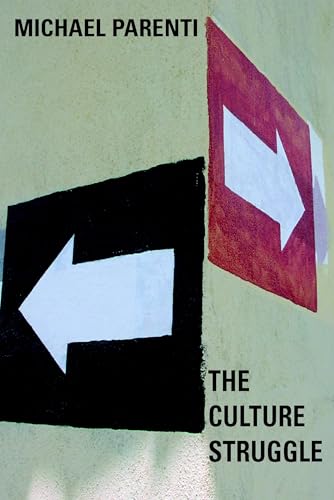
Culture Struggle
By Michael Parenti
The Culture Struggle exposes culture as an instrument of social power rather than a passive tradition. Parenti reveals how our all-encompassing social structures are weaponized to elevate some and disparage others. Ultimately, the book delivers a concise but vital truth: to understand the enduring grip of the powerful, we must first understand how they shape, commodify, and control civil society.
Despite being a relatively short read, Parenti manages to say an immense amount about culture in our society. His structural precision leads to a concise and engaging text—one that is so captivating it feels over all too soon. At certain moments, Parenti masterfully makes the abstract concepts of cultural control feel completely intuitive, even if those profound insights occasionally felt like fleeting thoughts to me once I closed the book. The Culture Struggle ends up being a truly thought-provoking read, and one that sticks with you in your daily life.
Rating: 9 / 10
2026 SEPTEMBER
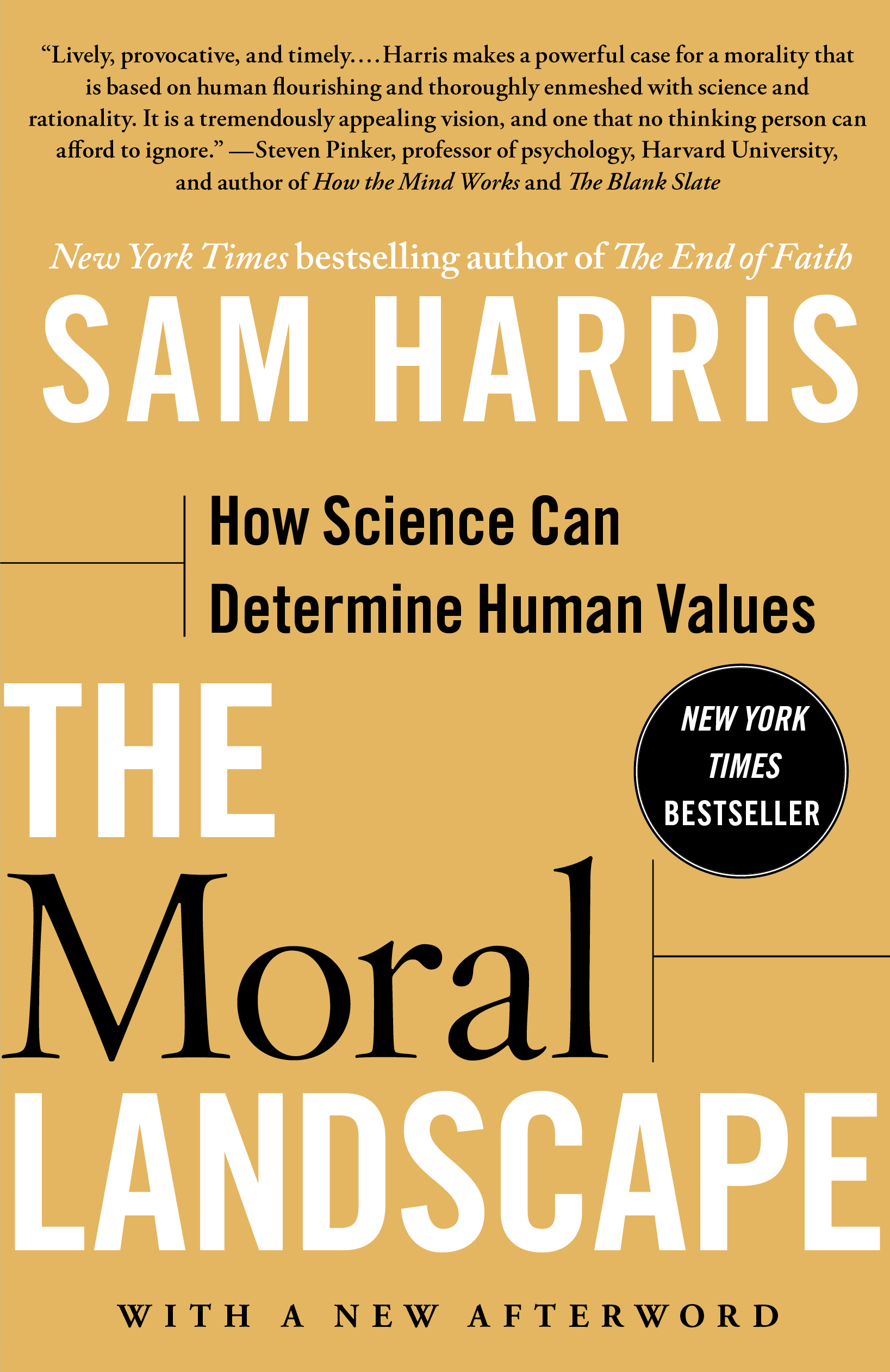
The Moral Landscape
By Sam Harris
Sam Harris’s The Moral Landscape is a thesis that puts moral relativism, religion, and traditional belief systems in its crosshairs, arguing that science can and should determine human values. Rather than mapping out a specific, practical roadmap for ethical living, the text focuses heavily on proving the theoretical possibility of a universal moral framework. Harris makes a case on two fronts: synthesizing neuroscience and other data that supports his claim, while establishing a foundational philosophical case which is independent of experimental data.
While the philosophical logic presents a complex hurdle at times, Harris successfully ties his abstract ideas with clarifying examples. Generally, the scientific evidence provided feels straightforward and provides a strong foundation for his arguments, even if the grand promise remains unseen. The Moral Landscape ends up being a bold rejection of cultural relativism and makes for a deeply thought-provoking read.
Rating: 8 / 10
2026 AUGUST
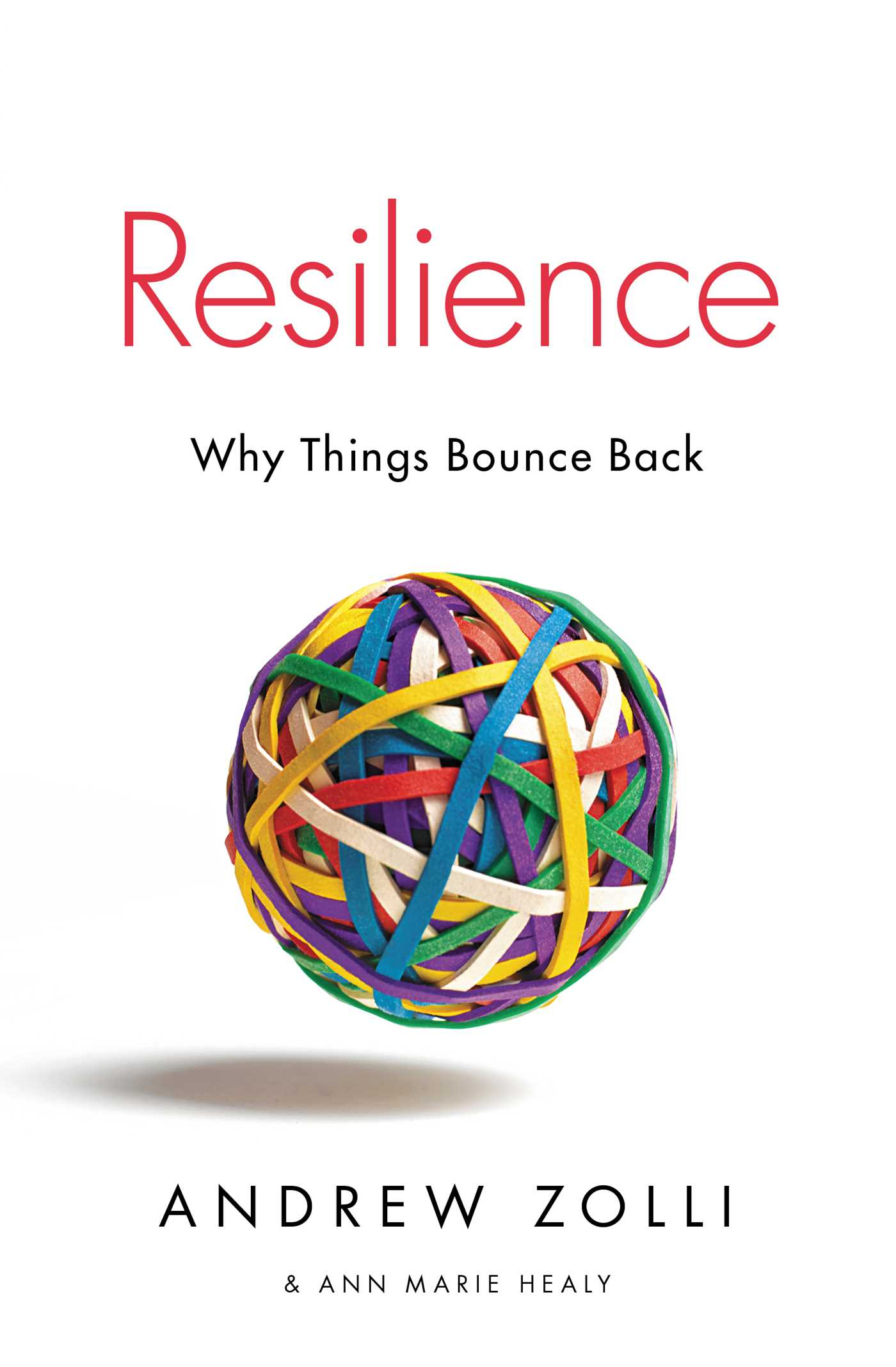
Resilience
By Andrew Zolli, Ann Marie Healy
Resilience is a book about why the things too big to fail always do, capturing the complexities and strengths of people, systems, or enterprises. While covering anything from the 2008 Great Recession to arsenic-poisoned Bangladeshi wells to Palauan politics, economy, and ecology, this book not only looks at what makes something more or less resilient, but also examines how patterns, scale, and interactions impact the efficacy of a system. Resilience scrutinizes real life stories around the world to see how we can build resilience in our organizations or personal lives.
Ultimately, it provides an excellent balance of intriguing anecdotes and complex systems analysis. The variety of the stories, both in their historical context and their purpose makes for a consistently captivating experience. Would I say this book makes me able to understand how to build more resilient systems or be more resilient myself? Probably not, but it still makes for a deeply interesting and noteworthy read.
Rating: 8 / 10
2026 JULY
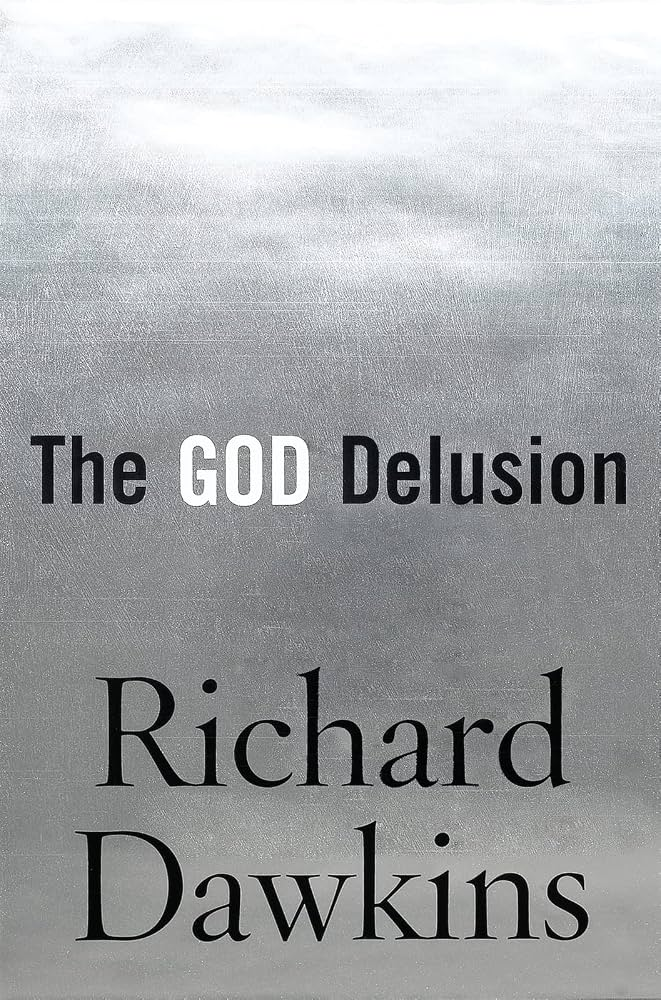
The God Delusion
By Richard Dawkins
The God Delusion is a powerhouse of a book that unforgivingly tears down religion. The author, Richard Dawkins, a biologist and prominent critic of religion, brings a bold, uncompromising, and logical approach to answering some of humanity's biggest religious questions. Primarily he argues against the Abrahamic religions, using natural selection as well as other evidence to challenge the idea of God, scripture, and religious moral codes.
While reading I often found myself reflecting on things I usually took at face value in my daily life, like cultural habits and moral assumptions. Dawkins' writing felt accessible and highly readable. While he makes very bold, challenging assertions, he keeps the logic easy to follow with examples, while balancing the tone with witty jokes and personal anecdotes. Overall, this book makes for an interesting, fun, and thought-provoking read.
Rating: 10 / 10
2026 JUNE
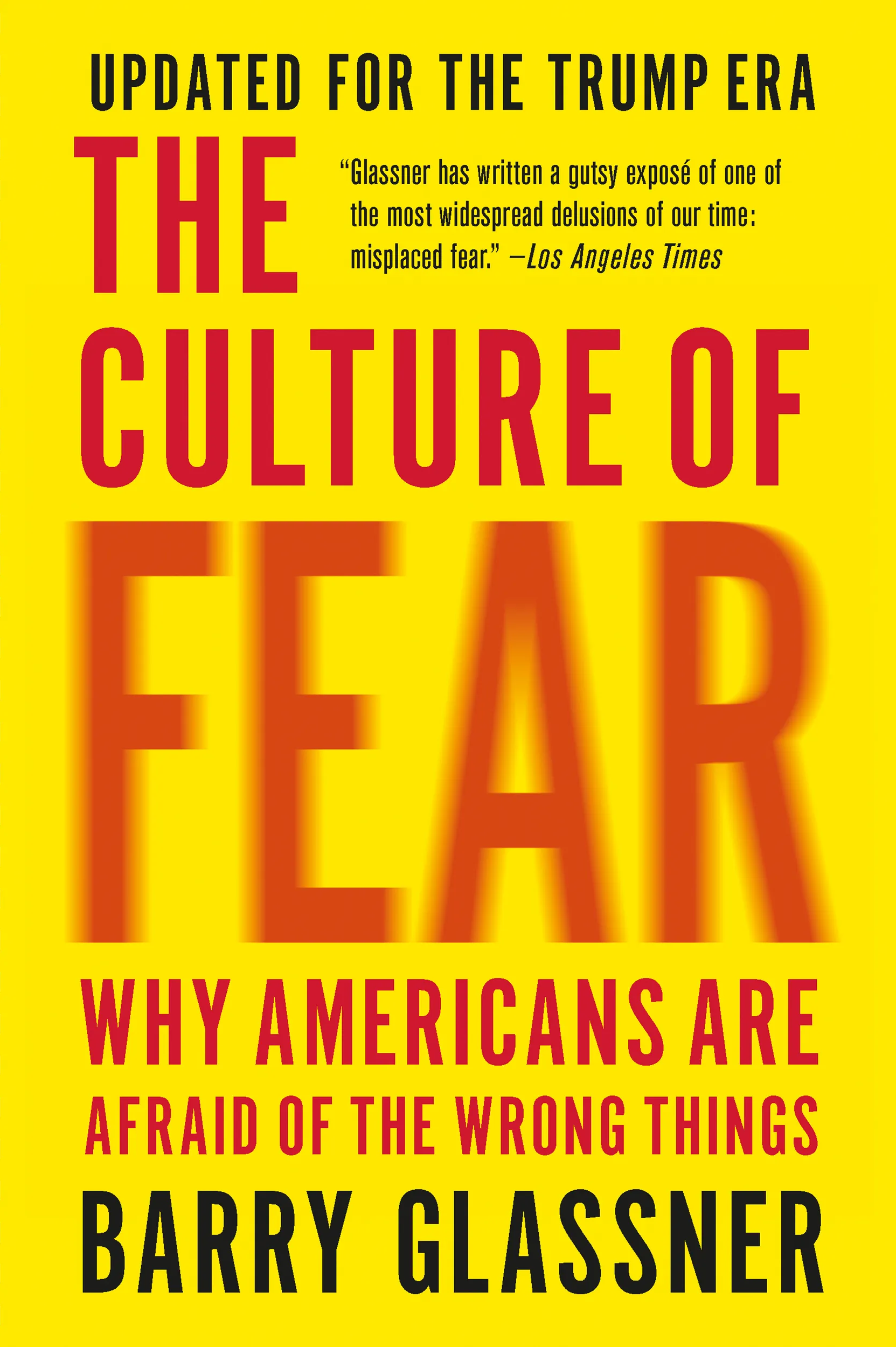
The Culture of Fear
By Barry Glassner
Barry Glassner’s frequently updated book, The Culture of Fear, examines exactly how panic is manufactured in the United States. Glassner structures each chapter with scientific precision and a consistent formula. He first hooks you with the sensationalized media stories that triggered a national panic, then systematically dismantles them with sobering statistics. The book doesn't just stop at debunking the myth; it continues by uncovering the deeper systemic rot or political anxieties driving the panic.
Even while reading this book decades after the relevance of some of the societal fears discussed have faded away, the pattern is clear and still applicable to the modern media landscape. Glassner does a great job of setting historical context which makes the issues of the past seem unsettlingly urgent. The book covers a wide variety of serious topics and takes responsibility by providing the deep understanding necessary for each fear in our culture. Ultimately, The Culture of Fear succeeds in turning a discussion of serious societal issues into an engaging, eye-opening narrative.
Rating: 8 / 10
2026 MAY
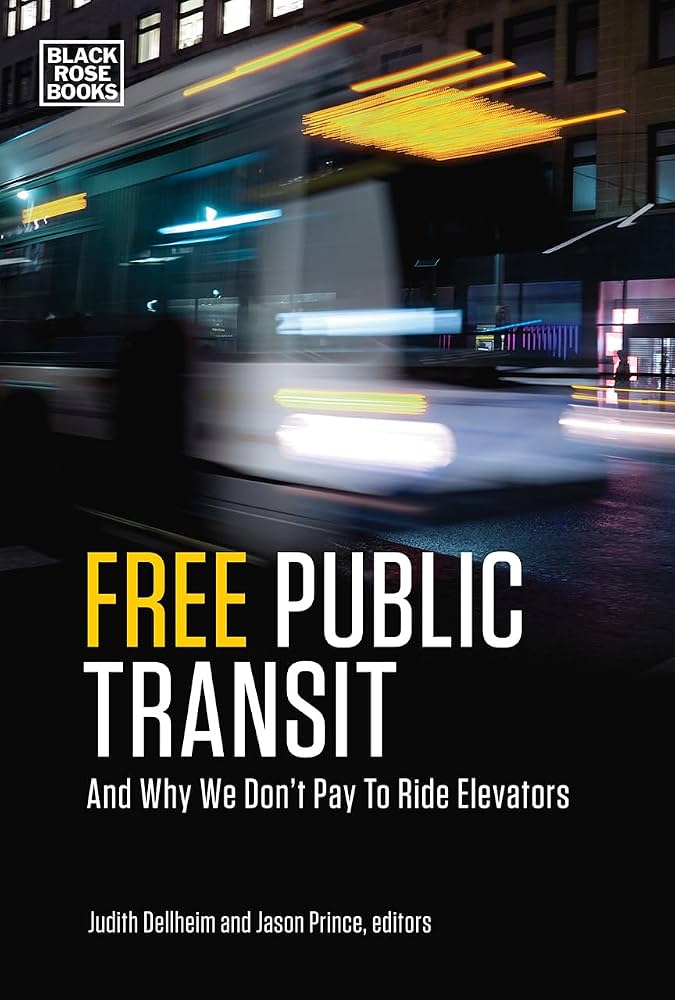
Free Public Transit
By Jason Prince, Judith Dellheim
Free Public Transit offers a highly analytical collection of case studies that meticulously documents the global evolution of public transportation. Moving fluidly across different eras and geographies, the text delivers precise historical accounts of transit networks and their direct impact on urban wealth distribution.
Admittedly, the dryness of the writing presents a challenging hurdle right from the start. Rather than softening its approach as the text continues, the entries grow increasingly dense, complex, and deeply tied to policy. Yet, this rigid style perfectly mirrors its subject matter; the book illustrates that public transit is ultimately a product of slow, uncompromising political machinery rather than technological innovation. In the end, the collection leaves readers with a real and unglamorous view of urban planning that mimics modern politics: complex, messy, and with an unsatisfying conclusion.
Rating: 8 / 10
2026 APRIL
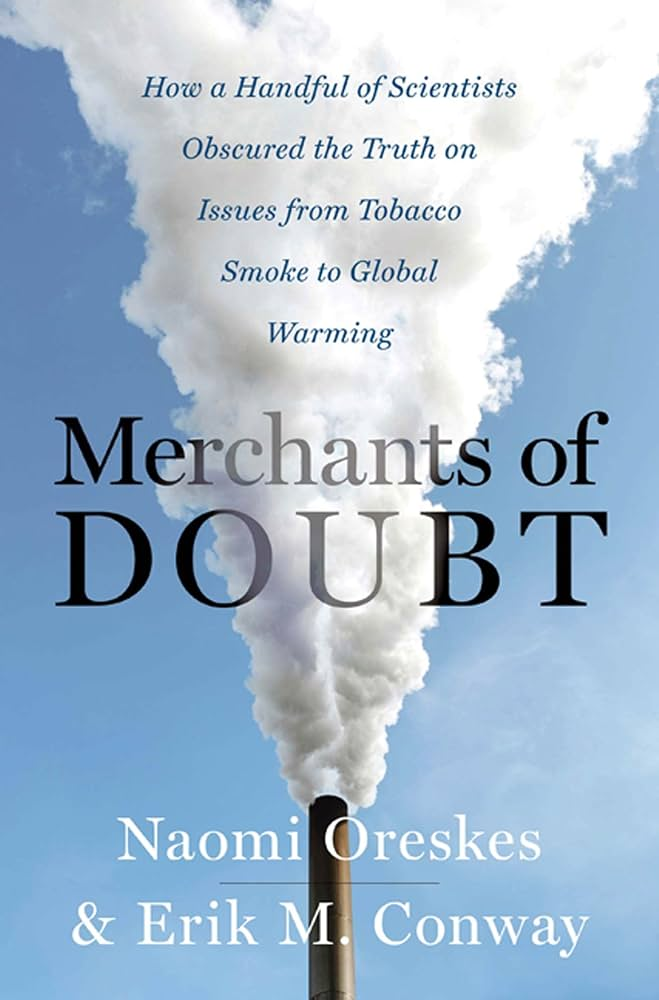
Merchants of Doubt
By Naomi Oreskes, Erik M. Conway
Merchants of Doubt delivers a compelling, historically grounded exposé that unmasks how a small cadre of influential scientists systematically manipulated public perception for political and corporate gain. Moving chronologically through a series of seemingly unrelated industries, the narrative meticulously tracks how these figures weaponized skepticism across decades of public policy debates. Compiling information from historical documents, events, and communications, the book pairs public statements against private correspondence to contrast the manufactured corporate narrative with reality.
I found the book to be an elegant, sophisticated, and consistently engaging narrative that paints a vivid portrait of institutional deception. Refreshingly, the text maintains a remarkably objective stance, resisting the urge to villainize its subjects even when their motivations appear deeply compromised. Ultimately, by evenly exposing the systemic failures of all parties involved, the book delivers a disciplined and eye-opening account of how doubt is manufactured.
Rating: 8 / 10
2026 MARCH
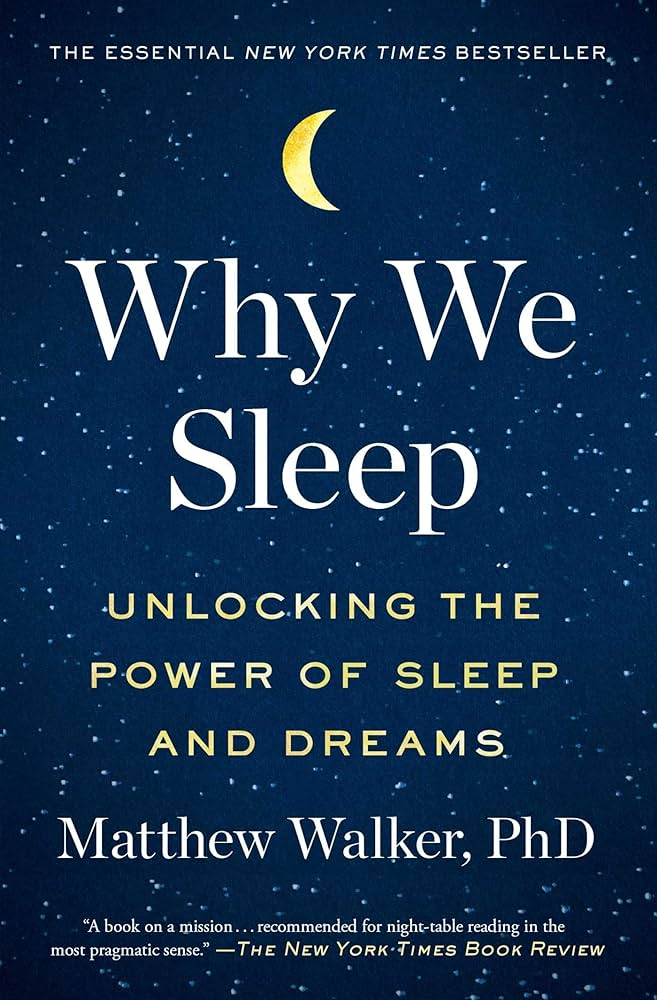
Why We Sleep
By Matthew Walker, PhD
In Why We Sleep, neuroscientist Matthew Walker offers a sweeping masterclass on the biological imperatives of rest, transforming decades of academic research into a cultural wake-up call. Rather than relying on common health clichés, Walker unpacks the evolutionary role of sleep, contrasting its ancient survival mechanisms against a modern landscape designed to disrupt them. The text functions as both an intellectual deep dive and a practical diagnostic tool, examining the steep physiological costs of our collective sleep deficit.
Reading this book proved to be an eye-opening, highly corrective experience that instantly exposed the flaws in my own daily routines. It shifts seamlessly between shocking statistical revelations and accessible science, fundamentally altering how the reader values a good night's rest. Ultimately, Walker succeeds in shifting the cultural narrative around sleep, reframing it from a symptom of laziness into a non-negotiable foundation of human health.